
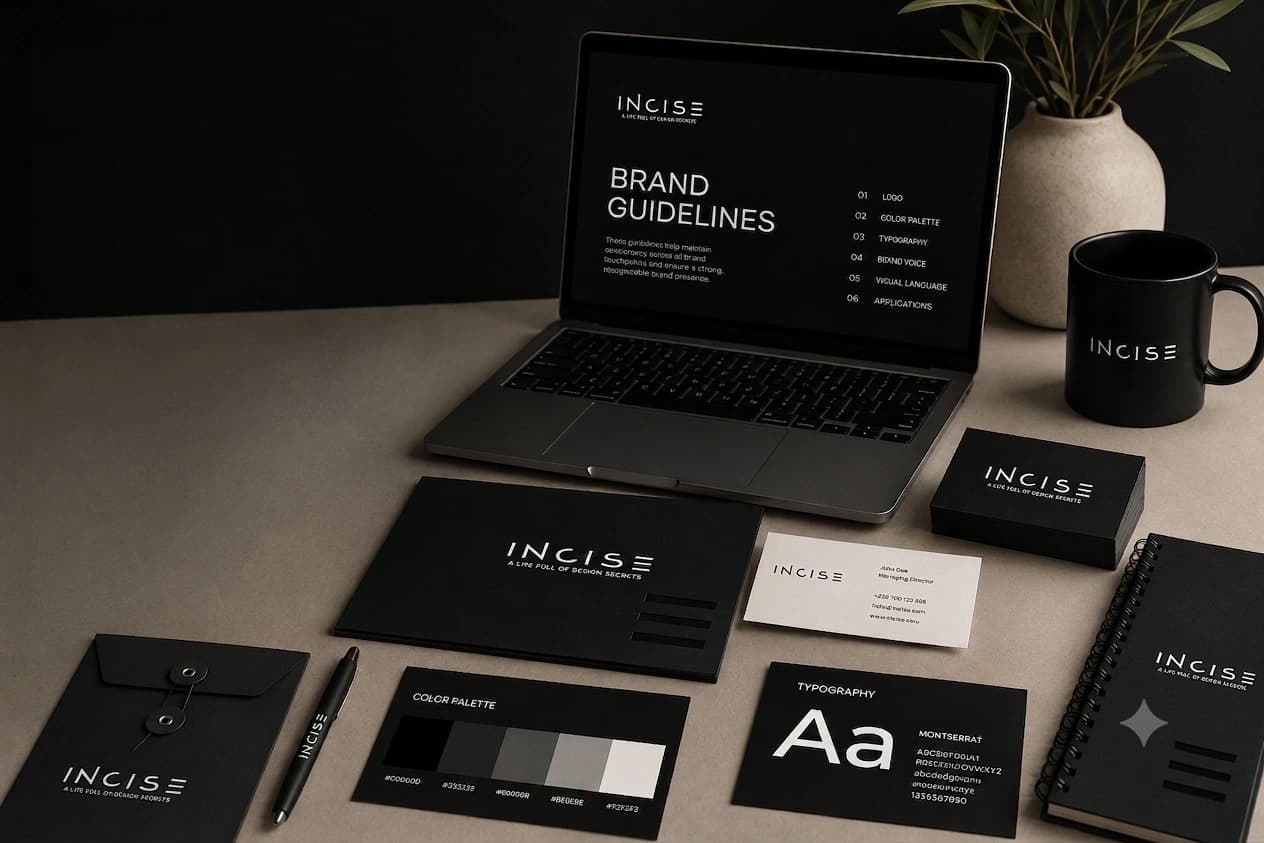
Starting a small business takes more than choosing a name and launching a website. To attract the right customers and earn their trust, you need more than a logo you need a strong brand identity for small businesses that communicates professionalism, builds credibility, and helps you stand out from competitors.
Many business owners think branding begins and ends with a logo. In reality, your logo is only one part of your brand identity. Your colours, typography, messaging, website, and customer experience all work together to shape how people perceive your business.
A strong brand identity helps customers recognise your business, remember it, and feel confident choosing you. When combined with a professional website, it creates a consistent experience that builds trust, strengthens your marketing, and supports long-term business growth.
What Is Brand Identity?
Brand identity is the collection of visual and verbal elements that represent your business. It's the intentional way you present your company to the world and the experience you want customers to associate with your brand.
A complete brand identity typically includes:
- • Your logo
- • Colour palette
- • Typography
- • Photography or illustration style
- • Tone of voice
- • Messaging
- • Website design
- • Business stationery
- • Marketing materials
- • Packaging etc
When these elements are used consistently, they create a recognisable identity that customers begin to associate with your business. It's also worth distinguishing brand identity from brand image. Your brand identity is what you deliberately create, while your brand image is how customers actually perceive your business. The closer those two align, the stronger your brand becomes.
Why Brand Identity Matters for Small Businesses
Small businesses often have only a few seconds to make a positive first impression. Before contacting you, potential customers are already judging your website, logo, social media, and marketing materials. A consistent brand identity helps them see your business as professional, trustworthy, and credible from the very beginning.
It Builds Trust
Trust is one of the biggest factors in a customer's buying decision. When your branding is consistent across your website, proposals, and other customer touchpoints, your business appears more organised and reliable. Consistency is one of the reasons branding affects customer trust and sales, especially for small businesses competing against more established companies.
Imagine two construction companies offering similar services at similar prices. One has a professional website, consistent branding, and branded quotations, while the other uses mismatched logos and an outdated website. Most customers will naturally have greater confidence in the first business.
It Makes Your Business Memorable
Customers rarely choose the first business they find. They compare several options before making a decision. A consistent brand identity makes your business easier to recognise and remember, whether someone visits your website today or comes across your business weeks later.
It Helps You Compete on Value
Strong branding helps customers see the value of your business before they experience your products or services. Rather than competing solely on price, you begin competing on professionalism, credibility, and customer confidence.
It Makes Marketing More Effective
Every advert, email, blog article, or social media post contributes to how customers remember your business. Consistent branding ensures each interaction reinforces the last, making your marketing more recognisable and more effective over time.
What Makes a Strong Brand Identity?
A strong brand identity is more than attractive design. It should clearly communicate who you are, appeal to your ideal customers, and create a consistent experience across every customer touchpoint.
Consistency
Consistency is the foundation of a successful brand. Your website, proposals, invoices, social media, and marketing materials should all look and feel like they belong to the same business. Consistent branding builds recognition, and recognition builds trust.
Customer-Focused Design
Your brand should be designed for your ideal customers, not your personal preferences. A law firm, for example, benefits from a professional and understated identity, while a children's preschool may use brighter colours and friendlier visuals.
When reviewing your branding, ask yourself:
- • Who am I trying to attract?
- • What qualities do I want customers to associate with my business?
- • Does my branding communicate those qualities?
Simplicity
The most memorable brands are often the simplest. A distinctive logo, a limited colour palette, consistent typography, and clear messaging are easier to recognise and apply across your website, packaging, signage, and marketing materials.
Flexibility
As your business grows, your brand should grow with it. A flexible brand identity allows you to introduce new services, products, or markets without losing the consistency customers already recognise.
How to Create a Brand Identity for Your Small Business
Creating a strong brand identity begins with strategy rather than design. Start by defining your ideal audience. Think about who you want to serve, what problems they need solved, and why they should choose your business over a competitor. The answers will guide every branding decision you make.
Next, define what makes your business different. Instead of making broad claims such as "We provide quality services," explain the specific value you offer. Clear positioning makes your business easier to understand and far more memorable.
Once your strategy is clear, develop your visual identity. If you'd rather work with a designer, explore my Branding Services to see what's included. This includes your logo, colour palette, typography, imagery, icons, and supporting graphics. Every design decision should reinforce the personality and values you want customers to associate with your business.
Your communication style is just as important as your visuals. Whether you're writing website copy, preparing proposals, or replying to enquiries, your tone of voice should remain consistent. Professional, approachable, educational, or confident—the important thing is that it reflects your business across every customer interaction.
Finally, apply your branding everywhere. A great brand identity only creates value when customers experience it repeatedly. Your website, quotations, presentations, invoices, email signature, packaging, and marketing materials should all reinforce the same visual and verbal identity.
A Practical Example
One project that reinforced this lesson for me was Incise Uganda, a supplier of construction products. The company already had quality products, but its branding didn't fully reflect the professionalism of the business.
Rather than attempting an expensive rebrand all at once, we created a visual identity system that could grow alongside the company. We started with the essentials its logo, packaging, product labels, and supporting marketing materials and ensured every new design built on the existing identity instead of replacing it.
As the business expanded its product range, the branding remained consistent across every touchpoint. The result wasn't just a more attractive brand; it helped present Incise as a more credible and professional supplier in a competitive industry.
That experience reinforced an important lesson: successful branding isn't defined by how much you spend at once. It's built through consistency and by making thoughtful improvements over time. You can also browse this and other branding projects in my portfolio to see how these principles are applied to real businesses.
Small Business Brand Identity Checklist
Use this quick checklist to see whether your business has the foundations of a strong brand identity.
Brand Strategy
- • ☐ I know who my ideal customer is.
- • ☐ I can clearly explain what makes my business different.
- • ☐ My messaging is consistent across every platform.
Visual Identity
- • ☐ I have a professional logo.
- • ☐ My colour palette is consistent.
- • ☐ I use the same typography across my brand.
- • ☐ My photography, illustrations, and graphics follow a consistent style.
Customer Experience
- • ☐ My website reflects my brand.
- • ☐ My proposals, invoices, and business documents are professionally branded.
- • ☐ My email signature is consistent with my branding.
- • ☐ My social media profiles have a consistent visual identity.
If you ticked most of these, you're building a strong foundation for your brand. If several boxes remain unticked, strengthening your brand identity could significantly improve how customers perceive your business.
Want a printable version? Download the Small Business Brand Identity Checklist (PDF) and use it to review your business whenever you're planning a rebrand, launching a new website, or introducing new products and services.
Download the checklist → /downloads/small-business-brand-identity-checklist.pdf
Conclusion
A strong brand identity is one of the most valuable investments a small business can make. It helps customers recognise your business, builds trust, and makes your marketing more effective over time.
You don't need to build the perfect brand overnight. Start with a clear strategy, create a consistent visual identity, and apply it across every customer touchpoint. As your business grows, your brand can grow with it while continuing to strengthen your reputation.
Ready to Build a Stronger Brand?
If your branding no longer reflects the quality of your business, it may be time for a refresh I help small businesses create professional brand identities and websites that build trust and attract the right customers.
Explore my Branding Services, browse recent projects, or get in touch to discuss your project.