
Cost is often one of the first things a small-business owner considers when planning a website. In my small-business website cost guide, I looked at some of the factors that shape the budget, including the amount of content and the number of pages. That leads to another useful question: what does a 5-page website include, and is it enough for your business?
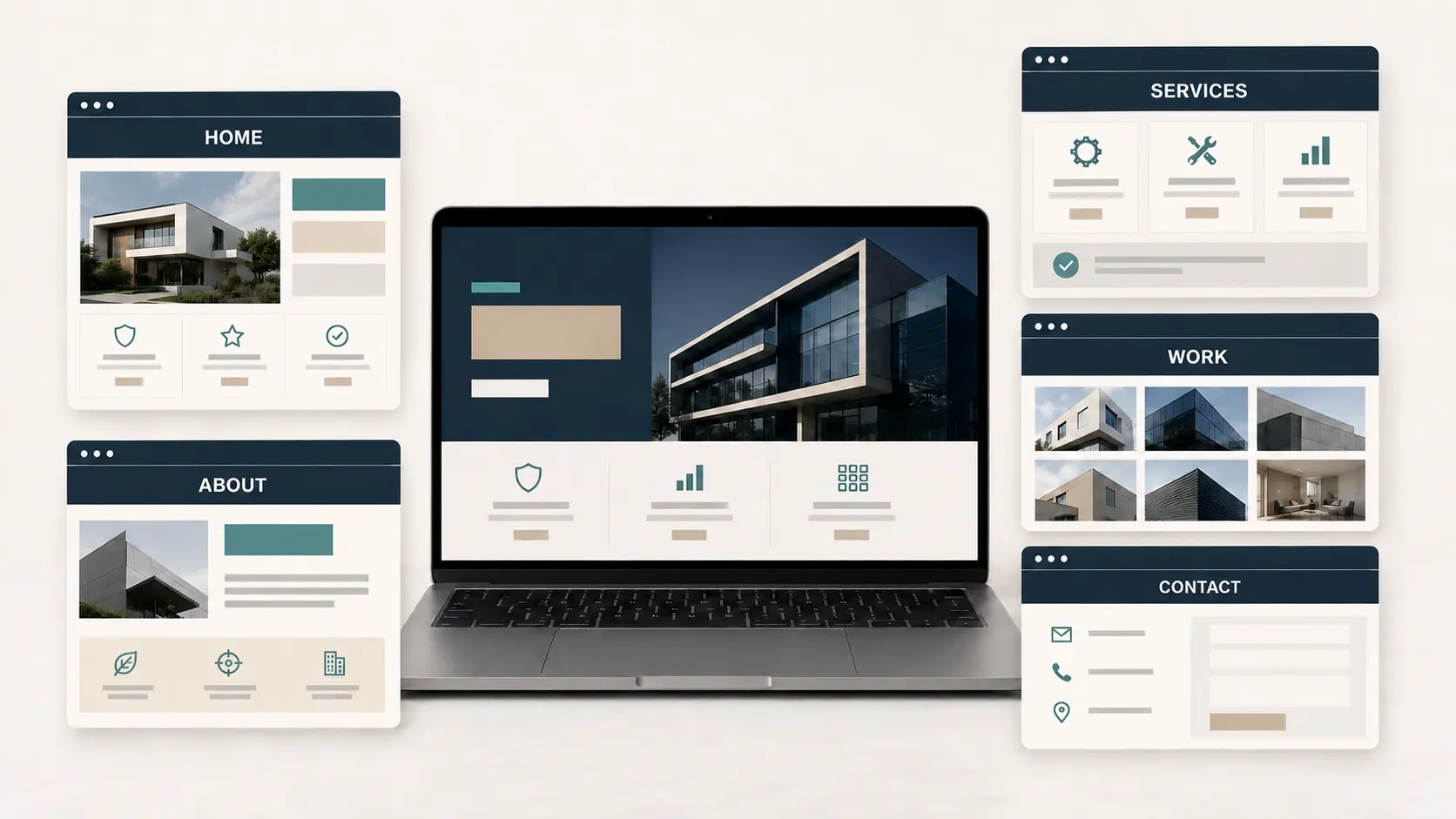
For many small businesses, five pages are a practical starting point. A typical structure includes a Home page, About page, Services or Products page, Contact page and one page chosen around the needs of the business.
That additional page could be Work or Case Studies for a consultant, Gallery for a farm or school, Menu for a restaurant, Rooms for a hotel or News for a business that regularly shares useful information.
The goal is not simply to fill five pages. It is to give customers the information they need before they contact or buy from you.
What does a 5-page website mean?
A five-page website normally has five main pages in its navigation. Each page has its own URL and purpose. The sections within a homepage do not count as separate pages.
Supporting pages such as a privacy policy or enquiry confirmation page may sit outside the main five. This varies between website providers, so it is worth confirming before the project begins.
What matters most is the purpose of each page. Five useful pages can explain a focused business clearly, while five pages filled with repeated or general information may still leave customers with questions.
Which five pages should a small business website have?
There is no fixed combination for every business, but the following structure works for many small service businesses.
1. Home page
Your homepage should quickly explain what your business does, who it helps and what visitors should do next.
It can introduce your main services, give people a reason to trust the business and direct them to other useful pages. It does not need to tell the entire company story or explain every service in detail.
Someone visiting for the first time should not have to guess what you offer. A clear description of the business is usually more useful than a clever headline that says very little.
2. About page
People visit an About page because they want to know who they may be dealing with. They are looking for signs that the business is real, experienced and able to help them.
You can introduce the founder or team, explain how the business began and mention relevant experience. Real photographs, qualifications or achievements can also help build confidence.
Keep the customer in the story. Instead of only talking about your history, explain how that experience helps you provide a better service today.
3. Services or Products page
This page should explain what customers can get from your business. Do not stop at a list of service names. Briefly explain what each service does, who it is for and what problem it helps solve.
One page can work when the services are closely related. For example, a small consultancy might explain three connected services on one organised page.
If the services are very different or need detailed explanations, they may deserve separate pages. In that case, a five-page website may be too limiting.
4. A page that helps customers choose you
This is where the five-page structure should become more flexible.
A designer, consultant or contractor might need a Work or Case Studies page. A school may benefit from Admissions or Gallery. A restaurant may need a Menu, while a hotel might prioritise Rooms. A farm might use this page to show its produce, facilities or supply process.
Ask yourself: what does a customer still need to see before contacting us? The answer will help you choose the most useful page.
5. Contact page
Once someone is interested, contacting the business should be easy. Include the details people genuinely need, such as a phone number, email address, short enquiry form, location and opening hours.
Avoid asking for too much information at the beginning. In many cases, a name, contact detail and short message are enough to start a conversation. You can also tell people when they should expect a response.
Why can a 5-page website be a good choice?
A five-page website gives your business more room than a one-page site without creating a large website that is difficult to prepare or maintain.
Visitors can go directly to the information they want. Someone interested in your experience can visit About. Someone comparing your offer can open Services. A person ready to enquire can go straight to Contact.
The structure can also help search engines understand the website. Each page can focus on a different subject instead of asking one long page to explain everything. Five pages will not automatically improve your Google ranking, but they give the website a clearer foundation.
It is also easier to prepare five useful pages than to launch a large website filled with short or repeated content. You can focus on the information customers need now and add more pages as the business grows.
How many pages should a small business website have?
There is no number that suits every small business. Five pages can work well when you have one main audience, a small number of related services and one primary goal, such as receiving calls, bookings or quotation requests.
You may need more pages if you:
- • Offer several services that customers search for separately.
- • Serve different locations or customer groups.
- • Need ecommerce, payments or complex bookings.
- • Have many products, projects or resources to present.
- • Plan to use articles as an important source of search traffic.
A larger website is not automatically better. Every page should have a reason to exist. However, forcing a complex business into five pages can leave customers with unanswered questions.
The same is true in the other direction. A new business with one clear offer might only need a strong one-page website. The right number depends on what the business needs to communicate, not on what looks more impressive.
A practical example from Smart Insights
When I developed the Smart Insights website, its main navigation was organised around Home, About, Services, News and Contact.
News made sense because prospective students often need current information about applications, scholarships and study destinations. It was more useful for that audience than adding a Testimonials page simply to complete a standard list.
The News section also gave the website room to grow. The main navigation stayed clear while new articles could be added over time. Starting with five main pages does not mean the website must always remain limited to five URLs.
Choose the right pages, not just five pages
A useful five-page website should take a customer through a simple journey. It introduces the business, explains the offer, builds trust and makes contact easy.
For a focused small business, five well-planned pages can be enough to create a credible website and generate enquiries. For a more complex business, they can become the starting point for a larger website.
Once you understand the pages you need, the next step is choosing a website designer who fits your business.
If you need help choosing between a one-page website, five-page website or larger structure, explore my website design service for small businesses and compare the scope that best matches your goals.